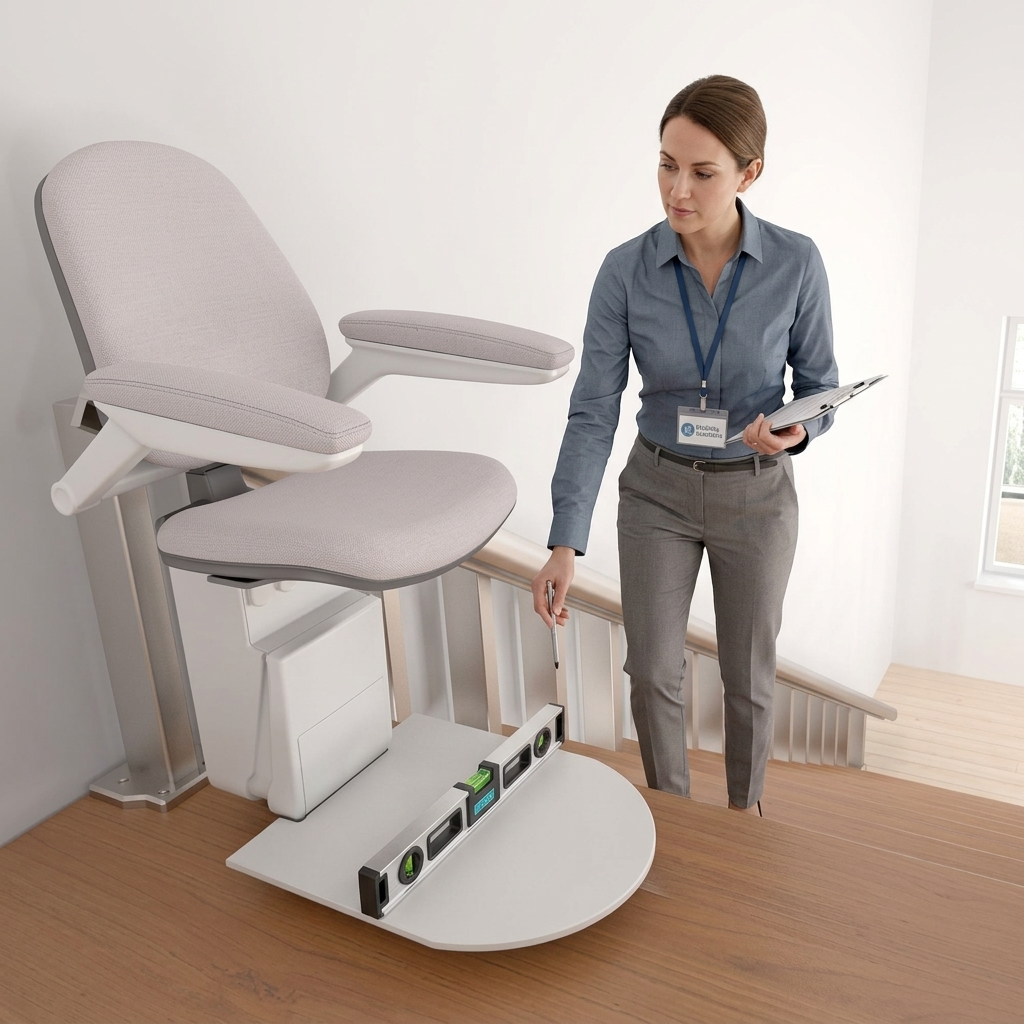
Stairlift safety is something every family thinks about when a lift first gets mentioned. Modern stairlifts come with multiple layers of protection built in as standard. Know what to look for and you’ll make a much better decision for yourself or someone you care about.
Are Stairlifts in the UK Required to Meet Safety Standards?
Yes, stairlifts sold and installed in the UK must comply with BS EN 81-40. That’s the British and European standard covering the construction and installation of stairlifts and inclined lifting platforms for persons with impaired mobility. It covers load capacity, emergency stops and rail stability. Every stairlift we supply at Obam meets or exceeds those requirements, so customers across Lincolnshire, Nottinghamshire and beyond know their lift is safe and compliant.
What Safety Mechanisms Are Built Into Modern Stairlifts?
Modern stairlifts are well designed. There are multiple features working together at all times to protect you on the stairs. Here’s what you should expect from any reputable stairlift in the UK:
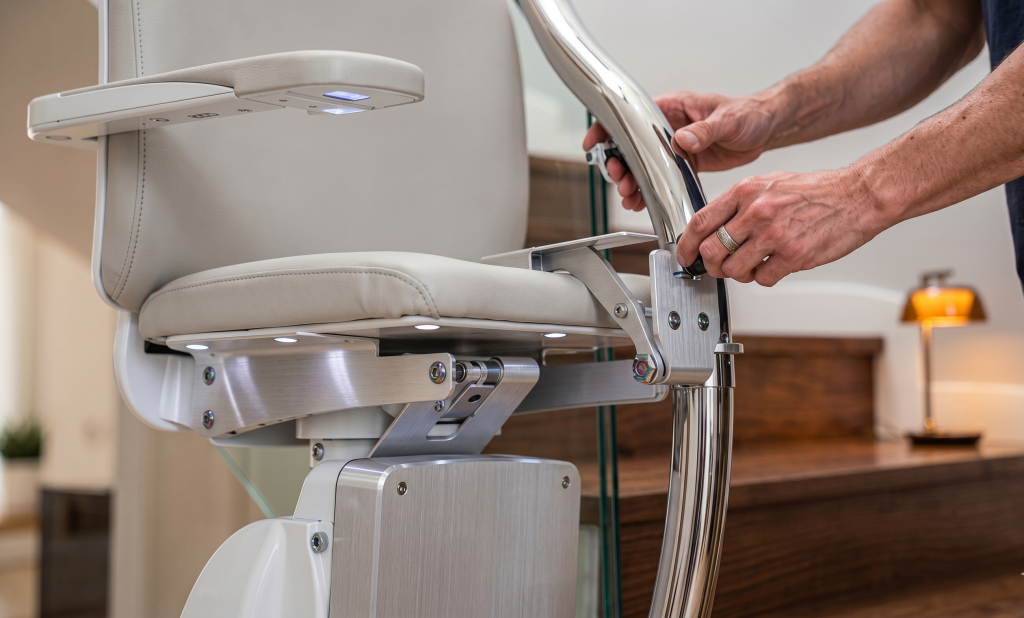
A safety belt is standard on virtually all seated stairlifts. It keeps you secure throughout the ride. Particularly useful on steeper staircases.
Sensors at the footrest (and sometimes along the rail itself) will stop the lift automatically if something gets in the way. A pet, a shoe, a bag left on the stairs. The lift stops. Simple as that.
Pressure-sensitive edges around the carriage work alongside the sensors. If the lift makes contact with something, it stops immediately and won’t restart until the path is clear.
Getting on and off is where falls are most likely. A swivel seat addresses that directly. It rotates to face the landing before you stand, so you’re never trying to get up with your back to the stairs.
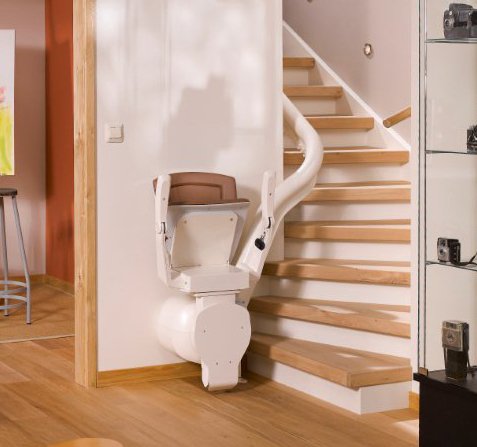
When the lift isn’t in use, the footrest and armrests fold away. So the staircase stays clear for everyone else in the house. It’s a small thing, but it matters.
Stairlifts travel slowly. Under BS EN 81-40, the maximum rated speed is 0.15 metres per second. Models vary, but most travel at up to that limit. It’s a deliberate safety threshold, not an arbitrary one.
Stairlift controls work on constant pressure. You hold the control to move, and the lift stops the moment you let go. You’re in charge of every movement, and you can stop at any point you want to.
Is a Curved Stairlift as Safe as a Straight Stairlift?
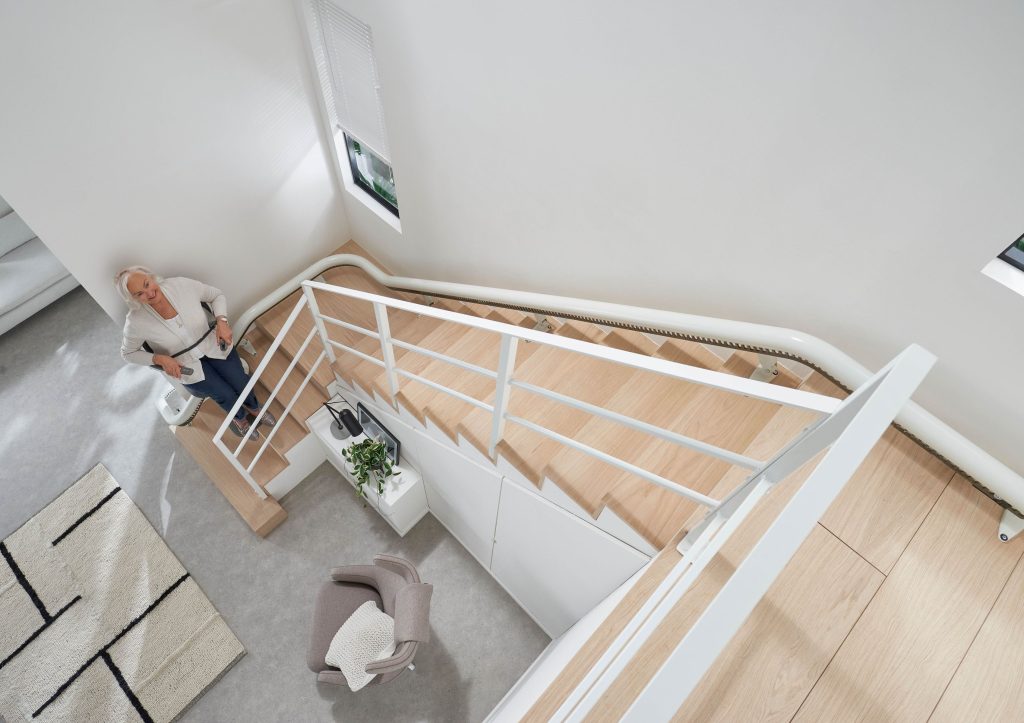
A curved stairlift is just as safe, but the rail has to be right. The rail on a curved stairlift is made to the exact measurements of your staircase. Every bend, every landing, every turn. A poor fit creates vibration and instability, so precision matters. Our technical surveyors are trained to measure and specify curved stairlifts for some genuinely tricky staircases. The result is a smooth, stable ride from bottom to top.
What Power and Battery Safety Features Should I Look For in a UK Stairlift?
Battery power is worth understanding. Most modern stairlifts run on rechargeable onboard batteries that top up whenever the lift sits at its charging point. So if the power goes out (and it does, especially in winter), your stairlift keeps going. You won’t get stranded on the wrong floor.
- Automatic parking: the lift returns to its charging point when not in use, so the battery stays ready.
- Low battery alerts: indicator lights or a display tell you or your carer when charge is getting low.
- Soft start and stop: the lift eases in and out of movement rather than jolting. Much more comfortable.
Are Perch Stairlifts and Standing Stairlifts Safe for People Who Can't Bend Their Knees?
Yes. Perch and standing stairlifts are built for exactly this situation. If bending your knees fully is painful or not possible, perhaps because of arthritis or following surgery, a standard seated stairlift might not be right for you. A perch seat lets you travel in a semi-standing position, leaning against an angled seat. The harness and footrest are adapted to support you in that position throughout the journey. We offer standing stairlifts as part of our range. And because our surveyor-advisors aren’t salespeople, they’ll tell you honestly which option suits your situation best.
How Does Professional Installation Affect Stairlift Safety?
It affects it considerably. Even a well-made stairlift becomes a risk if the rail isn’t properly anchored, the wiring isn’t correctly connected, or the drive system hasn’t been set up for the user’s weight. Our engineers are trained by the manufacturers themselves. They follow strict installation procedures and carry out full safety checks before we hand anything over. Every new stairlift we install comes with at least a 12-month warranty, and we show you how to use it properly before we leave.
What Ongoing Maintenance Does a Stairlift Need to Stay Safe?
A stairlift needs regular attention. It’s a mechanical and electrical system, and things wear over time. Sensors need checking. Rails need lubricating. Batteries need testing. We offer servicing and maintenance contracts for everything we supply, and our engineers carry out all the work.
We also run a genuine 24/7 on-call service. Not a call centre. An actual engineer, available every day of the year including bank holidays and Christmas. Because a fault doesn’t check the calendar before it happens.
- Obstruction sensor inspection and cleaning
- Rail and drive mechanism lubrication
- Battery capacity testing
- Fastener and mounting bracket checks
- A full test run with safety circuit verification
Is a Refurbished Stairlift Safe?
A refurbished stairlift is safe when it’s been properly checked and restored. Ours are. Before any refurbished lift goes out for installation, it goes through a thorough inspection. Sensors, seat mechanisms, battery systems, structural components. Everything gets checked. And it’s fitted by the same engineers who install our new models. If you’re working with a tighter budget, a refurbished stairlift is a good option. You don’t have to compromise on safety to save money.
What Should I Ask During a Stairlift Survey?
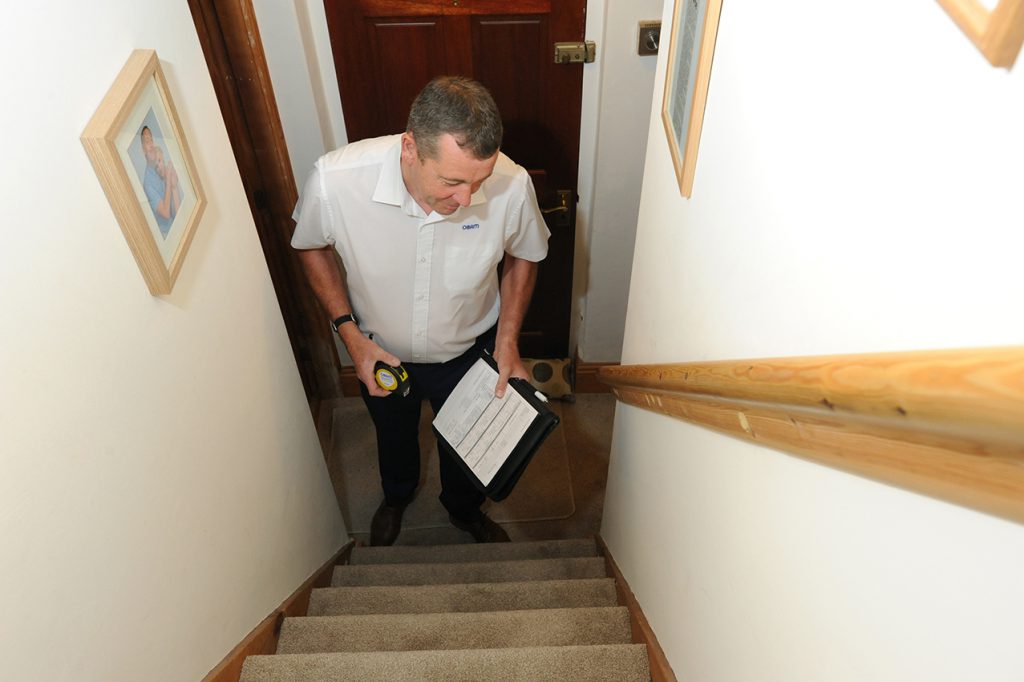
A free survey is the best place to start. Our surveyor-advisor will look at your staircase, talk through your needs and help you work out which stairlift makes sense. Come prepared with a few questions. These are worth asking:
- Which safety sensors does this model include as standard?
- How does the swivel seat work at the top and bottom of the stairs?
- What happens during a power cut?
- How will I know when it needs a service?
- What does the warranty cover?
Our advisors are salaried. They’re not on commission. So they’re focused on finding the right fit for you, not on pushing a particular model.
Are There Safety Features Designed for Narrow Staircases?
There are. Narrow staircases are common in older UK homes and they don’t have to be a barrier. Compact stairlift models have slimmer carriages and rail profiles, leaving more room to pass. When folded, the seat, footrest and armrests tuck away neatly. The staircase stays usable for everyone. We’ve fitted stairlifts in some surprisingly tight spaces over the years. Our surveyors measure carefully and make sure the model we specify gives you the clearance you need.
Talk to Us About Stairlift Safety
We’ve been helping people stay safe and independent in their own homes since 2000. Our team has over 100 years of combined experience in the stairlift sector. We work with private customers and every local authority in Lincolnshire and Nottinghamshire. We offer straight stairlifts, curved stairlifts, refurbished lifts and short-term rentals. And we back all of it with a real 24/7 engineer on-call service.
Call us on 01427 787532 or get in touch online to arrange your free, no-obligation survey. No pressure. Just honest advice.