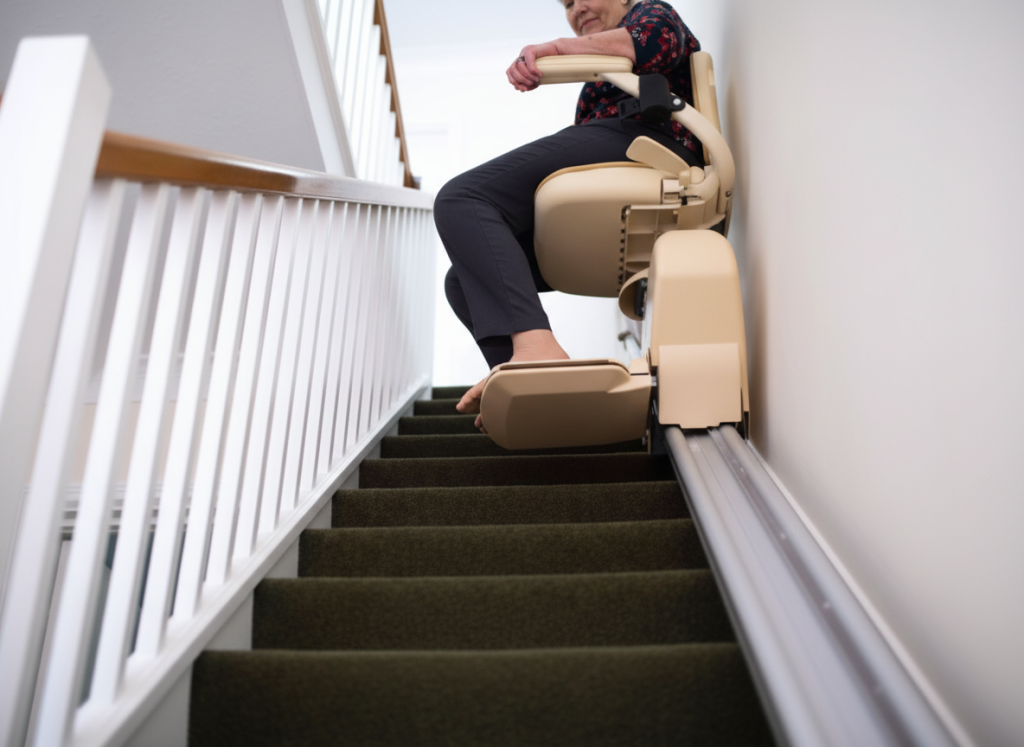
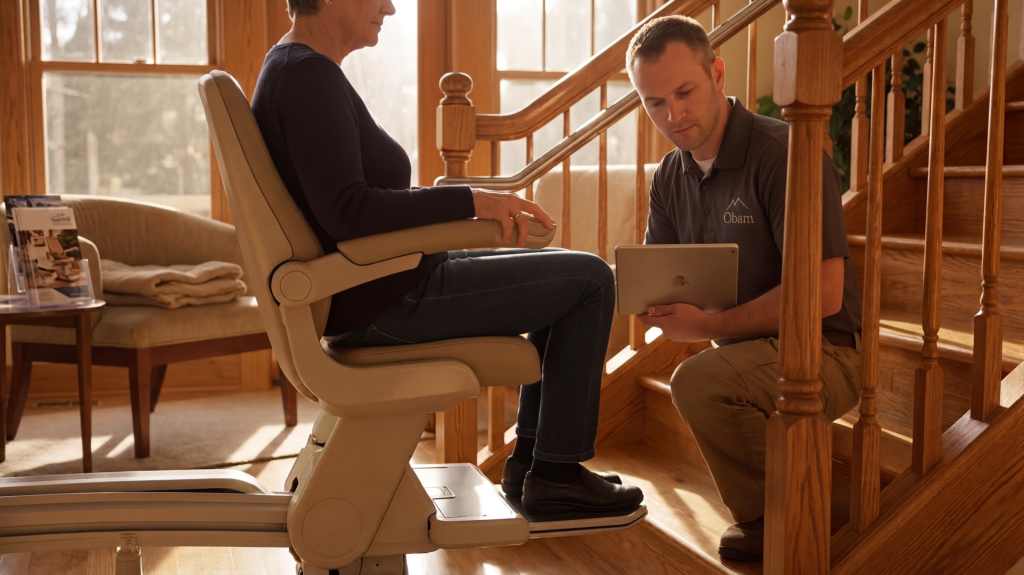
If you’re thinking about getting a stairlift, the assessment process can feel like a bit of a mystery. What actually happens when someone visits your home? How long does it take? And what should you expect before you receive a quote?
Fair questions. They deserve straight answers.
At Obam, we’ve carried out stairlift assessments across Lincolnshire and Nottinghamshire for over 25 years. We know that understanding the process upfront removes the uncertainty from a decision that can change your daily life. So let’s walk through exactly how it works: from the first phone call to the final quote.
Why a Home Survey Matters
Here’s something worth knowing right away. A stairlift is not a one-size-fits-all product. Every staircase is different. Every person has different needs. And every home has its own quirks.
That’s why a proper home survey is essential before any quote is given. Without one, there’s simply no way to know whether the stairlift being recommended will actually do the job. Any company that gives you a price over the phone without seeing your staircase isn’t putting your needs first.
The survey covers the full picture: staircase width, height, any bends or landings, power supply location and how you move around your home each day. All of it feeds into the recommendation.
If your staircase has curves, bends or intermediate landings, you’ll need a curved stairlift tailored to your exact measurements. A simple, straight flight opens up broader options and quicker installation. But either way, accurate measurement is what ensures the right fit.
What Happens Before the Survey
Getting started is simple. Call us on 01427 787532 or contact us through the website, and we’ll arrange a convenient time for one of our assessors to visit. There’s no charge. No obligation to proceed.
Before the visit, it helps to think about a few things:
- Who will use the stairlift? If it’s for a family member, try to have them there during the survey so the assessor can understand their needs directly.
- Do you have specific concerns? Perhaps you’re worried about whether a stairlift will fit on narrow stairs. Or maybe you’re unsure whether a seated or standing option suits best. Write your questions down so nothing gets missed.
- Is an occupational therapist involved? If you’re applying through the Disabled Facilities Grant scheme, your local authority may have already arranged an OT assessment.
Let us know. We work closely with occupational therapists and local authorities across our service area. OTs can also submit survey requests directly through our website for stairlifts, through-floor lifts, hoists and ramping.
During the Home Survey: What to Expect
This is the part people are most curious about. So let’s be specific about it.
Your Assessor Isn’t a Salesperson
We only employ salaried surveyor-advisors. They’re not on commission. They have no reason to push a particular model. Their job is to find the best solution for you. That’s it.
This matters. Commission-based salespeople have a financial incentive to recommend certain products. Our team doesn’t. They’ll tell you honestly what will work, what won’t, and sometimes that a stairlift isn’t the right answer at all.
Taking Measurements
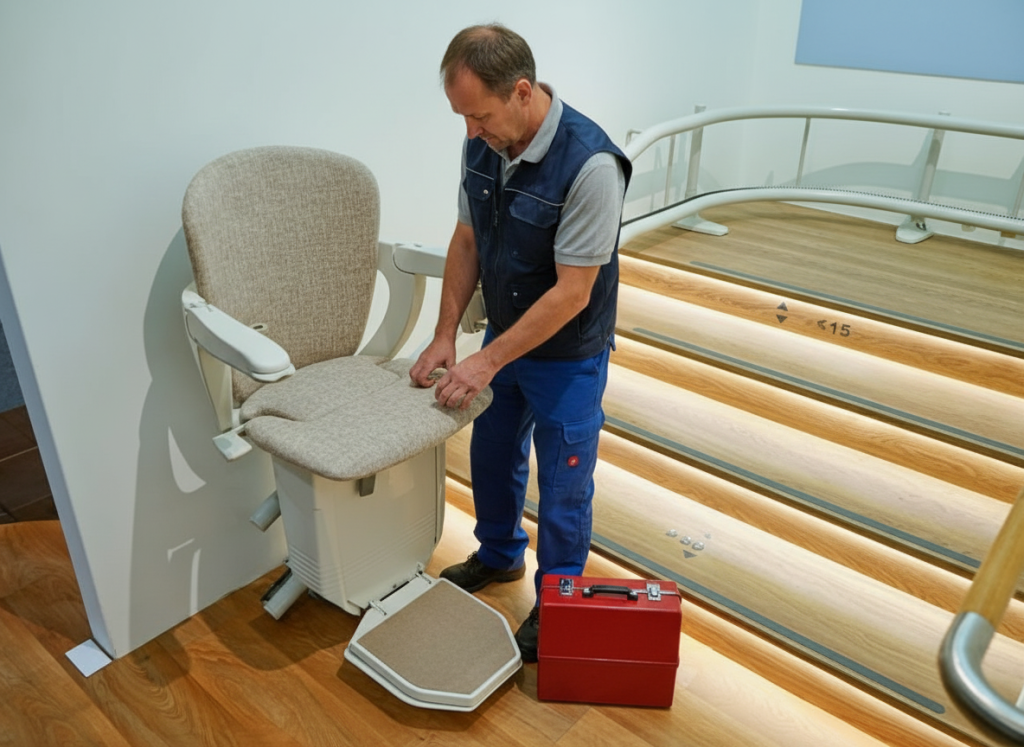
Your assessor will take detailed measurements of your staircase, including:
- Overall length and width
- Height of individual treads and risers
- Position of any bends or landings
- Clearance at the top and bottom
- Distance from walls and bannisters
For staircases that are particularly narrow, these measurements become even more important. Staircases under 700mm typically need specialist solutions. Your assessor will factor in both the staircase dimensions and the user’s seated measurements to work out which models are suitable.
Assessing Your Mobility Needs
A good stairlift assessment goes well beyond measuring stairs. Your assessor will want to know how you currently manage on the staircase, whether you have difficulty bending your knees or hips, how your upper body strength and grip feel, and whether your condition is likely to change over time.
This conversation shapes everything. Someone who struggles to bend their knees might benefit from a perch seat that allows travel in a semi-standing position. Limited grip strength might mean push-button controls work better than a joystick. And if your mobility could change, we’ll factor that in so you don’t outgrow your stairlift within a year or two.
Reviewing the Layout Around Your Stairs
The assessor also looks at the wider space around your staircase. Is there enough room at the top and bottom for safe transfer on and off? Are there doors, radiators or other obstacles that could affect fitting? Will the stairlift park in a position that still lets other people use the stairs?
Most modern stairlifts have folding arms, seats and footrests, so they tuck away neatly. But we need to confirm this works in your specific home.
After the Survey: Recommendations and Quote
Once the survey is done, your assessor talks you through the findings. You’ll hear which stairlift models suit your staircase, why one option is recommended over another, what the installation involves and how long it will take, and a clear, itemised quote.
For a straight stairlift, installation typically takes 2 to 4 hours. Curved models take longer: usually 4 to 6 hours, because the rail is custom-manufactured to your exact staircase profile.
The quote itself should be transparent. We separate equipment costs, installation charges and any applicable VAT relief. If you’re eligible for VAT relief on your stairlift, that saves you 20% straight away. We’ll make sure you know about it.
No Pressure to Decide on the Day
We guarantee not to use any form of pressure selling. You’ll never hear there’s a “special offer” that expires today. You won’t be told the price goes up if you don’t sign now. Those are sales tactics. Not how we work.
Take your time. Compare options. Talk it through with family. We’re confident in what we offer, and we’d rather you make an informed decision than a hurried one.
What Happens When You Decide to Go Ahead
The process moves quickly from here. Straight stairlifts can often be fitted within days. Curved stairlifts need the rail to be manufactured to your exact specifications, so they take a bit longer. Your assessor gives you a realistic timeline during the survey.
On installation day, our manufacturer-trained engineers handle everything. The rail attaches directly to the stair treads, not the wall, so there’s no structural damage to your home. After fitting, they test the stairlift thoroughly, demonstrate all the controls and safety features, and stay until you’re completely comfortable using it.
After Installation: Warranty, Aftercare and Ongoing Support
The assessment and installation are just the start of your relationship with us. Every new stairlift comes with a minimum 12-month manufacturer’s warranty. Certain models may offer longer coverage depending on the manufacturer. Refurbished stairlifts also include a 12-month warranty, so you’re protected regardless of which option you choose.
Beyond the warranty, we offer flexible stairlift maintenance contracts that cover annual servicing and priority call-outs. Each service includes a 29-point safety and performance check carried out by our engineers. Regular servicing keeps your stairlift running reliably and helps catch small issues before they grow.
Our stairlift aftercare guide covers day-to-day care: keeping the track clean, battery maintenance and when to call an engineer. We also provide dedicated aftercare guidance for through-floor lifts if your assessment leads you towards one of those solutions instead.
If something does go wrong, our stairlift repair team attends 95% of call-outs on the same day, with 70% of issues resolved on the first visit. For anything that can’t wait, our 24/7 engineer support line connects you directly with a qualified engineer. Not a call centre.
Run into a minor issue? Our stairlift troubleshooting guide walks you through the most common problems and quick checks you can do yourself before picking up the phone.
And if your circumstances change down the line, whether you’re moving house, no longer need the stairlift or want it relocated to a different property, our stairlift removal and relocation service handles everything safely.
Assessments Beyond the Home
The same thorough assessment process applies when we work with organisations. We carry out surveys for care homes needing reliable mobility equipment for residents, schools that need to meet accessibility requirements, and commercial, retail and hospitality businesses looking to improve access for staff and visitors.
Each setting has different challenges. A care home might need equipment that handles heavy daily use across multiple residents. A school might need a solution that fits into a listed building. A restaurant might need access between split levels with minimal impact on floor space. Whatever the setting, our assessment process starts the same way: we visit, we measure, we listen, and we recommend what genuinely fits.
What If a Stairlift Isn’t Right for You?
Sometimes a survey reveals that a stairlift isn’t the best option. Maybe the staircase layout makes installation impractical. Or perhaps a through-floor lift would better suit your needs.
Because we’re an independent supplier, we have access to a full range of mobility solutions from leading manufacturers. We’ll always recommend what genuinely works for your situation, even if that means something other than a stairlift.
Ready to Book Your Free Home Survey?
Now you know what to expect, there’s nothing to worry about. The process isn’t complicated. It isn’t pressured. And it’s designed to make sure you end up with the right solution for your home.
Give us a call on 01427 787532. One of our team will talk through your requirements and arrange a time to visit that suits you. We’ve been helping people stay independent in their homes since 2000. Let us help you, too.
Frequently Asked Questions
How long does a stairlift home survey take?
A typical survey takes between 30 minutes and an hour. The assessor needs enough time to measure your staircase, discuss your mobility needs and explain the available options.
Do I need to prepare anything before the survey?
Nothing specific. It helps to have the person who’ll use the stairlift there during the visit. If you’ve had an occupational therapist assessment or have any medical information related to your mobility, having it to hand can speed things along.
Will the surveyor try to sell me something on the spot?
No. We only employ salaried assessors, not commission-based salespeople. Their role is to assess your needs and give honest recommendations. You won’t face any pressure to decide during or after the visit.
How soon after the survey can a stairlift be installed?
Straight stairlifts can often go in within days. Curved stairlifts need a custom-manufactured rail, which adds manufacturing time. Your assessor will give you a realistic timeline during the survey.
Is there any cost for the home survey?
None at all. We provide free, no-obligation home surveys across Lincolnshire, Nottinghamshire and parts of South Yorkshire, East Yorkshire, Humberside and Derbyshire. Call us on 01427 787532 to arrange yours.