Estimated reading time: 9 minutes
Key Takeaways
- Stairlifts provide safe access between floors for those with limited mobility, with options for straight, curved and narrow staircases.
- Wheelchair ramps eliminate barriers at entrances and level changes, offering both permanent and portable solutions.
- Ceiling hoists enable safe transfers between beds, chairs and bathrooms and protect carers from injury.
- Through-floor lifts offer an elegant alternative to stairlifts for wheelchair users requiring access to multiple levels.
- Step lifts overcome external steps and trim level changes without requiring extensive ramp installations.
- Grab rails and handrails provide essential support in hallways, bathrooms and on staircases.
Making your home accessible shouldn’t mean sacrificing comfort or independence. Whether you’re adapting your property for mobility changes as you age, recovering from an injury or supporting a family member with disabilities, the right home adaptations for disabled access can transform daily living.
From simple additions like grab rails to more substantial installations such as stairlifts and through-floor lifts, modern mobility solutions blend into your home and provide the freedom you deserve. Here are eight essential adaptations that can help you continue living safely and comfortably in your own home.
1. Stairlifts: Safe and Comfortable Access Between Floors
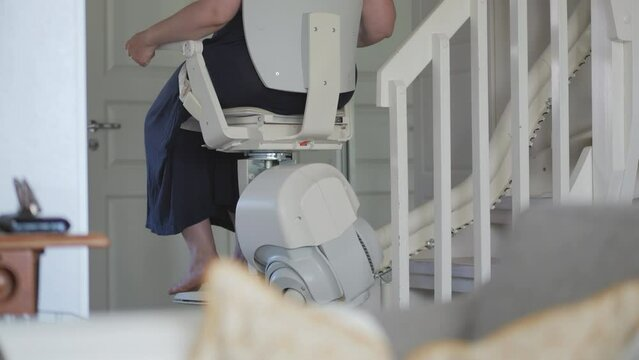
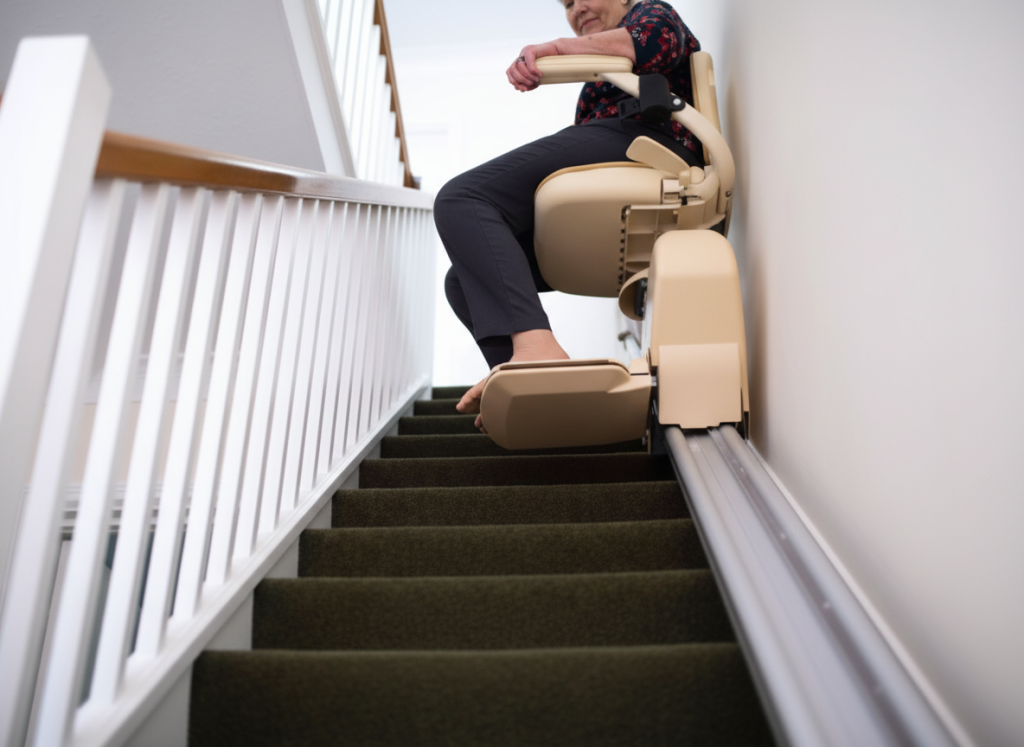
Stairs often become the first major obstacle when you experience reduced mobility. Stairlifts provide a practical solution that lets you access all areas of your home without the physical strain or safety risks of climbing stairs.
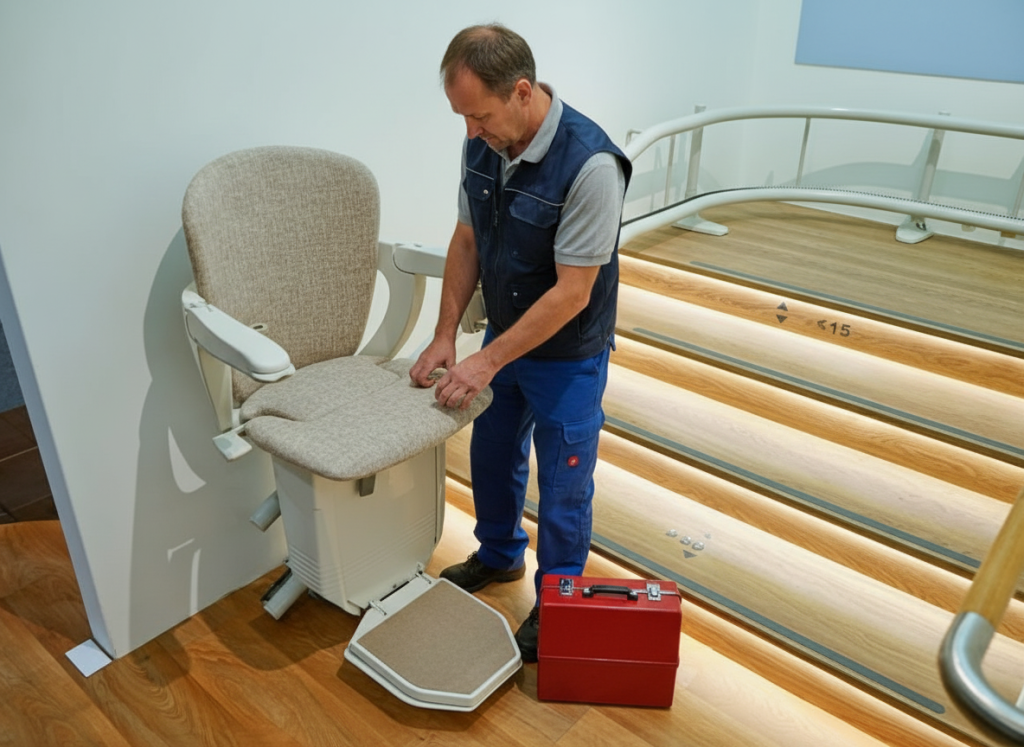
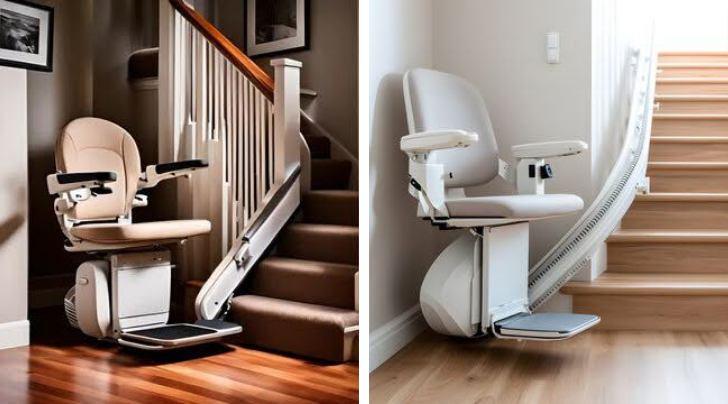
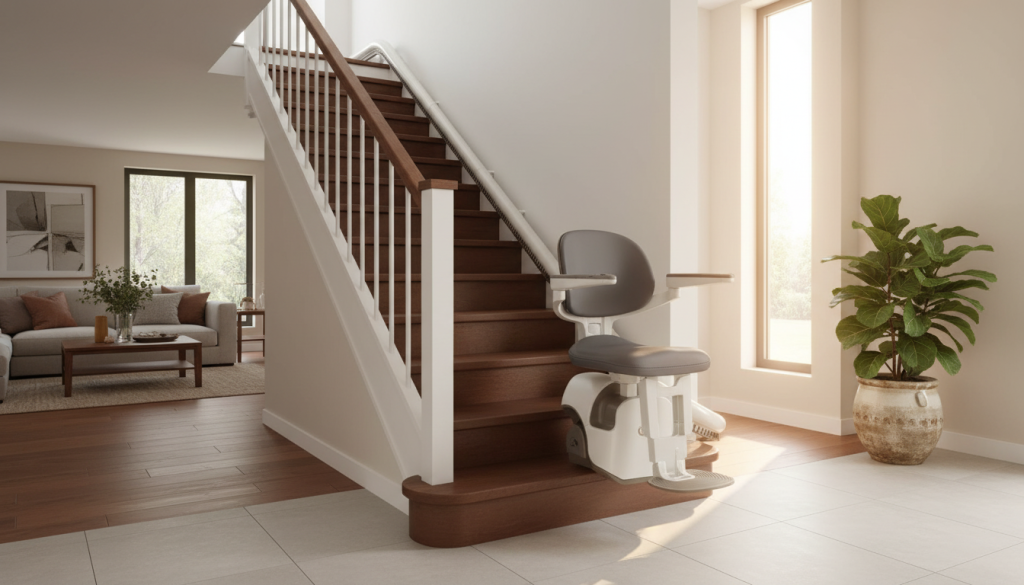
Straight stairlifts work brilliantly for homes with uninterrupted staircases. You can have one installed quickly with minimal disruption, and it folds away neatly when you’re not using it. This means it won’t obstruct others using the stairs. They’re the most cost-effective option.
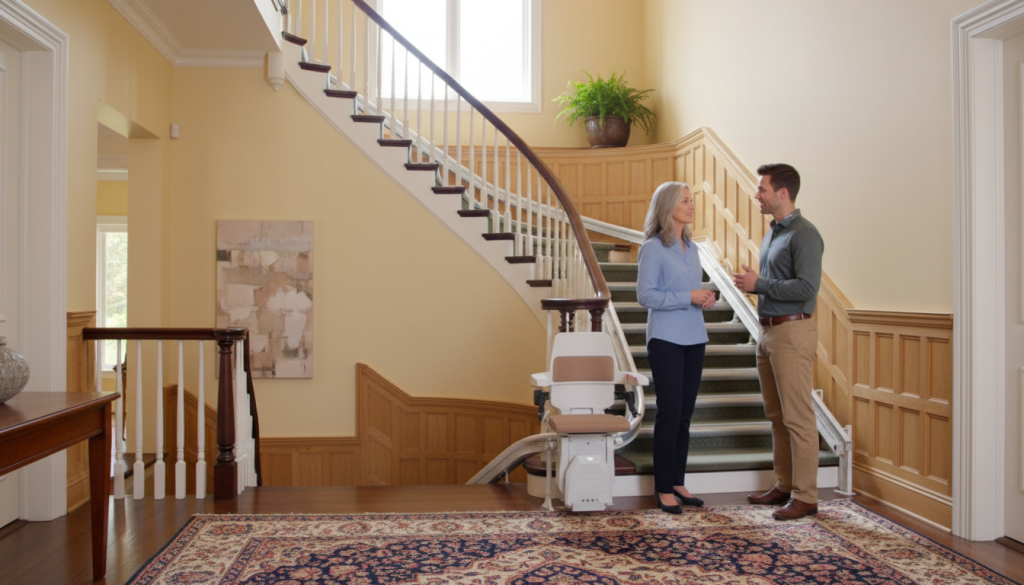
Curved stairlifts are custom-designed for staircases with bends, landings or curves. We precision-engineer each rail to follow the exact contours of your staircase, ensuring smooth operation regardless of the complexity of your layout.
Standing or perch stairlifts suit those who find it difficult to bend their knees or hips. These allow you to travel in a semi-standing position, making them perfect for narrow staircases where space is at a premium.
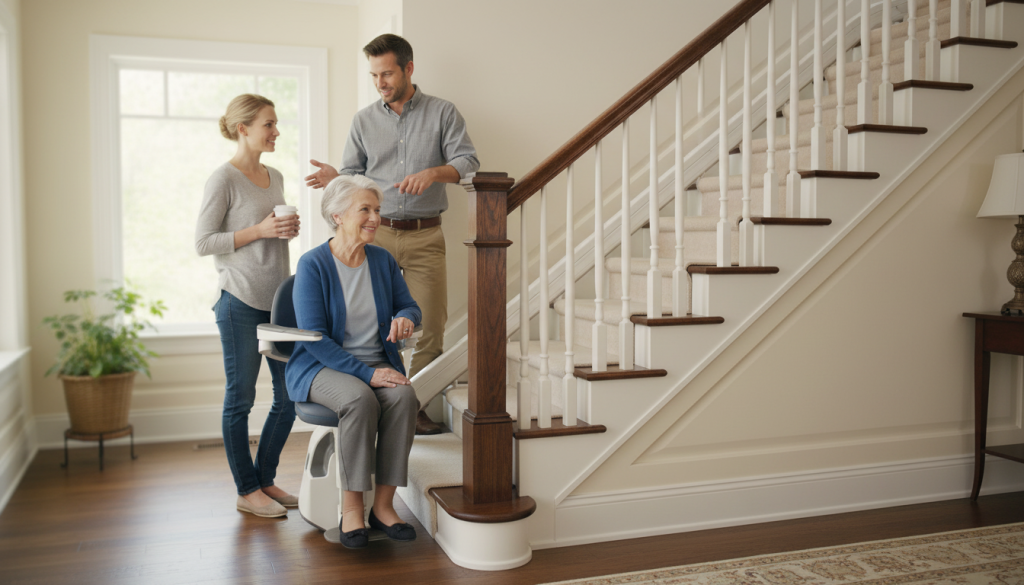
Modern stairlifts include safety features such as seatbelts, obstruction sensors and swivel seats that make getting on and off easier. With 24/7 support available, you’ll have peace of mind knowing help is always there should you need it.
2. Wheelchair Ramps: Removing Barriers at Entrances and Doorways
External steps and internal level changes can severely restrict wheelchair users and those with limited mobility. Ramps provide a straightforward solution that restores independence and makes daily movement around your home far easier.
Portable ramps offer flexibility for temporary needs or rental properties. These lightweight aluminium ramps can be positioned as needed and moved or removed easily. They’re ideal for visiting friends and family or accommodating short-term mobility challenges.
Modular ramp systems provide a more permanent solution that can be configured to suit various heights and locations. These professional-grade systems are weatherproof, slip-resistant and can include handrails for additional safety. They’re handy for overcoming multiple steps at front or rear entrances.
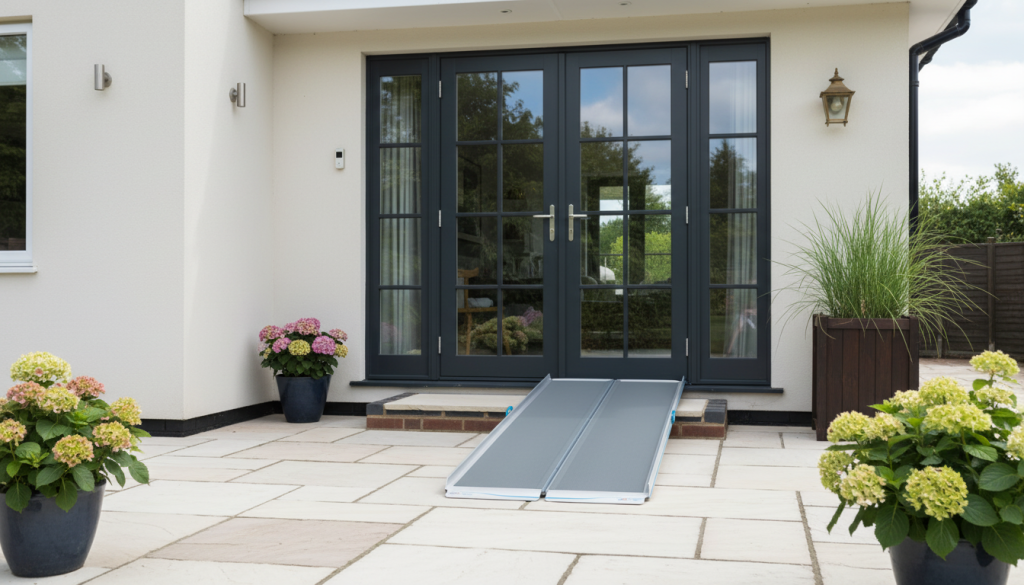
When you’re considering ramps, gradient is crucial. Professional assessment ensures your ramp meets all relevant safety standards and accessibility regulations, and fits seamlessly into your property.
3. Ceiling Hoists: Safe Transfers for Users and Carers
For individuals with severely limited mobility, transferring between beds, chairs, wheelchairs, and bathrooms poses significant challenges and injury risks. Ceiling hoists provide a dignified, safe solution that protects both you and your carers.
These systems consist of a track mounted to the ceiling with a motorised hoist that glides along it. Using a supportive sling, the hoist gently lifts and moves the individual from one location to another with smooth, controlled movements.
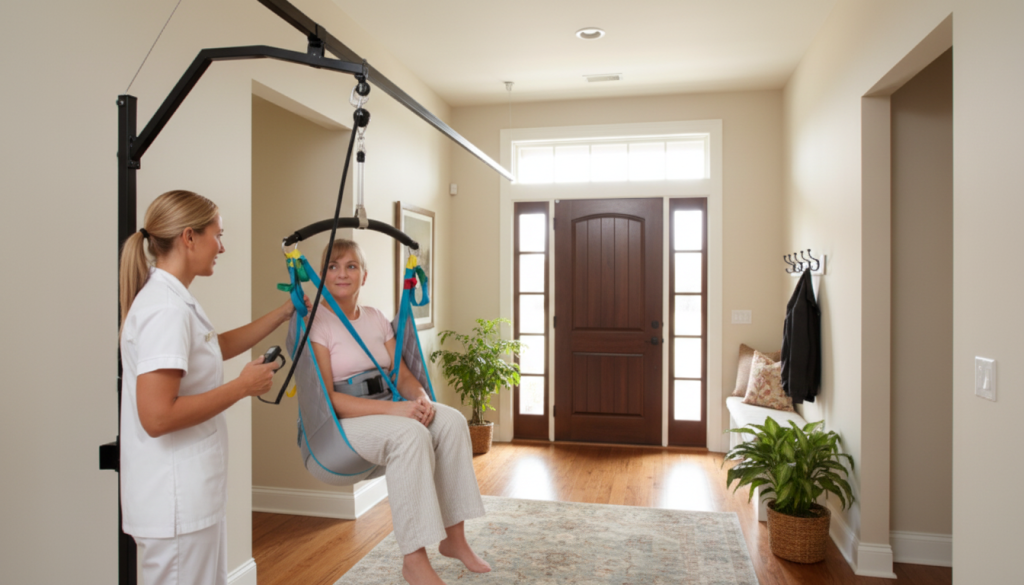
The benefits extend beyond safety. Ceiling hoists promote independence by enabling individuals to request transfers without waiting for multiple carers to be available. They also maintain dignity throughout the process, keeping you comfortably supported rather than lifting you manually.
We can customise track configurations to serve multiple rooms or specific transfer routes, such as from bedroom to ensuite bathroom. Modern hoists operate quietly and efficiently, with battery backup systems ensuring operation even during power cuts.
4. Through-Floor Lifts: Elegant Solutions for Multi-Level Access
When stairlifts aren’t suitable (particularly for wheelchair users or those who prefer not to transfer from their mobility aid), through-floor lifts offer an excellent alternative for home adaptations for disabled residents.
These compact lifts travel vertically between floors and require minimal structural changes to your home. Modern through-floor lifts are remarkably quiet, energy-efficient and can be installed with surprisingly little disruption to your daily routine.
The platform size accommodates wheelchairs comfortably. Controls are positioned for easy reach from a seated position. Safety features include emergency lowering systems, non-slip flooring and smooth start-stop technology that prevents jarring movements.
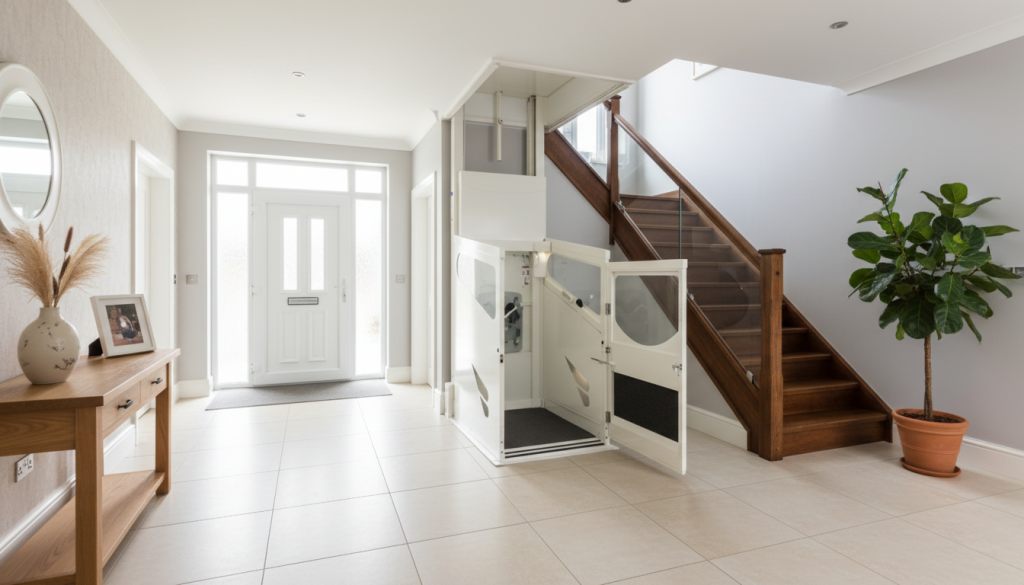
Through-floor lifts also offer aesthetic advantages. Unlike stairlifts that remain visible on your staircase, we can design these to blend with your home’s interior, with various finish options available to complement your décor.
5. Step Lifts: Overcoming External Steps and Small Level Changes
Not every level change requires a complete ramp installation. Step lifts provide a space-efficient alternative that’s particularly useful for overcoming external steps, raised doorway thresholds or split-level areas within your home.
These compact platform lifts raise and lower vertically, taking up minimal space but providing safe access for wheelchair users. They’re ideal when you lack the space required for a ramp or when weather-exposed ramps would require excessive maintenance.
We can typically install them faster and with less disruption than extensive ramping, making step lifts a cost-effective solution. We can install them both indoors and outdoors, with weatherproof options available for external locations.
6. Grab Rails and Handrails: Simple Yet Essential Support
Perhaps less dramatic than lifts or hoists, grab rails and handrails are fundamental home adaptations for people with disabilities that reduce fall risk and increase confidence when moving around your home.
Strategic placement matters enormously. Key locations include:
- Alongside toilets and in shower areas.
- Along hallways and corridors.
- On both sides of staircases (even if you have a stairlift).
- Near beds to assist with standing.
- At the entrance doorways.
Modern grab rails come in various styles, finishes and load ratings. But proper installation into solid fixing points is crucial. Poorly fitted rails can cause serious injury if they fail under load. Professional installation ensures we securely mount rails and position them at the correct height for your specific needs.
7. Walk-in Showers and Wet Rooms: Maintaining Bathroom Independence
Bathrooms present fall risks due to wet surfaces and the need to step over bath edges. Walk-in showers and wet rooms eliminate these barriers and maintain dignity and independence.
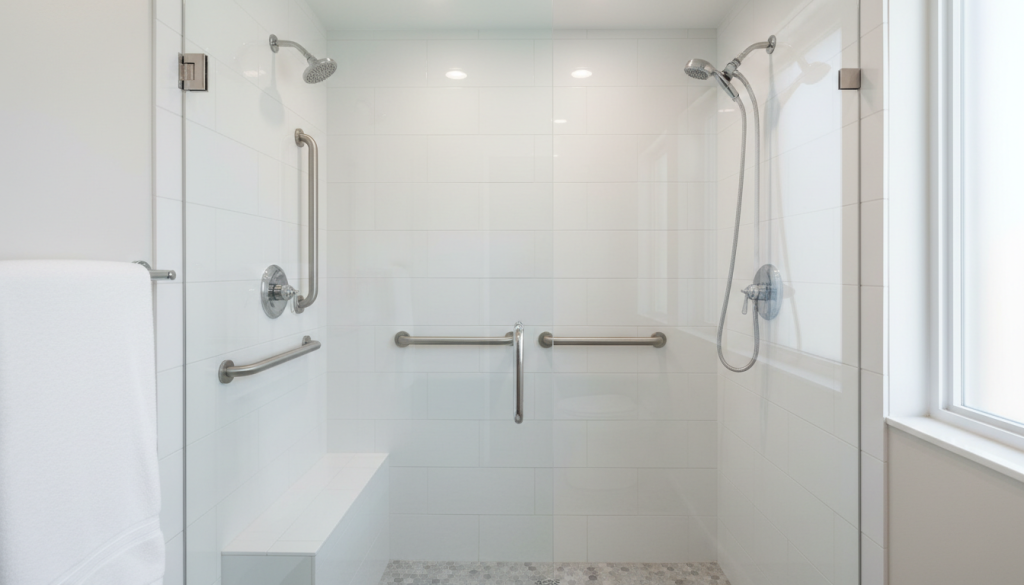
Walk-in showers feature low-threshold or level-access entry, removing the need to step over a bath edge. Combined with a shower seat, thermostatic controls (preventing scalding) and grab rails, these create a safe bathing environment.
Wet rooms take accessibility further by creating a fully waterproofed, level-access bathroom space. The entire floor can be gently sloped toward a drain, eliminating any threshold. This makes them ideal for wheelchair users and those using shower chairs or wheeled commode chairs.
You can enhance both options with non-slip flooring, good lighting and emergency pull cords, creating a bathroom that’s both safe and comfortable to use independently.
8. Widened Doorways and Lever-Style Handles: The Finishing Touches
Comprehensive home adaptations for disabled access must consider movement throughout your entire property. Standard doorways often prove too narrow for wheelchairs or walking frames, and traditional door knobs can be impossible to operate for those with arthritis or limited hand function.
Doorway widening typically involves removing the existing door frame and installing a wider one to accommodate wheelchair access.
Accessible door furniture includes:
- Lever-style handles require only a downward push rather than a grip-and-turn.
- Lowered light switches and electrical outlets.
- D-shaped pulls on sliding doors.
- Automatic door openers for heavier external doors.
These modifications make a substantial difference to daily independence, particularly when combined with other adaptations.
Creating Your Accessible Home
Implementing home adaptations for disabled access needn’t be overwhelming. Start by identifying your most pressing challenges. Is it about accessing upstairs bedrooms, getting in and out of your home, or managing bathroom safety? Prioritising the adaptations with the most significant immediate impact helps you plan effectively.
Many adaptations qualify for funding through Disabled Facilities Grants (DFG), offered by local councils to help with the cost of essential home modifications. Working with experienced suppliers who regularly liaise with occupational therapists and local authorities can help you navigate this process smoothly.
The right combination of adaptations should work together seamlessly, creating an environment where you can move safely and confidently throughout your home. Professional assessment ensures we correctly specify solutions for your individual needs rather than taking a one-size-fits-all approach.
Transform Your Home with Expert Support
At Obam Lifts, we’ve been helping people maintain their independence since 2000.
As an independent, family-run company, we’re not tied to any single manufacturer. This gives us the freedom to recommend mobility solutions that genuinely suit your needs and budget, not just the most expensive option.
With over 100 years of combined experience in the mobility sector, our team of salaried surveyor-advisors (not salespeople) will take time to understand your individual situation. We offer free, no-obligation surveys and 24/7 engineer support, and we work extensively with local authorities across Lincolnshire, Nottinghamshire and surrounding areas.